Roundup
The Best Board Games for Siblings
The problem is almost never the game. It is that one of them is nine and one of them is six, and anything that rewards reading or arithmetic hands the win to the older one every time.
By Scooter M. · Published · Last updated
How this page is funded: the buy links below are affiliate links. If you buy through one, we earn a commission at no extra cost to you. It does not change the order of the picks or what we say about them. Full disclosure.
Games we claim to have play-tested: 0. Every gift guide in this category implies a shelf of played games behind it. We do not have one, and we would rather say so. What we do instead is on this page: the publisher’s own player count, playing time and age band for every pick, cited to the publisher; a live price rather than a remembered one; and a plain answer on who should skip each game.
The short answer
The best game for two siblings with an age gap is Rhino Hero - HABA states 2-4 players, ages 5+, 5-15 minutes. It is a stacking game, so a steady hand beats being older, and the younger child wins often enough to keep playing. If one of them takes losing badly, buy Outfoxed! instead (Gamewright: 2-4 players, ages 5+, 20 minutes) - it is cooperative, so there is no loser at all.
Buying for two children at once is a different job from buying for one, and the difference is almost always the age gap. Brothers and sisters are rarely the same age, they play without an adult most of the time, and the thing you are really buying is forty minutes of peace rather than a game.
The age gap is the whole problem
A game that depends on reading, arithmetic or planning hands the win to the older child every single time. That is not a close contest that builds character - it is a predictable result, and the younger one stops agreeing to play after about four days. The box goes on a shelf and the gift is wasted.
So the useful question is not “what is a good game for an eight-year-old”. It is: what does this game actually test? If the answer is a skill that improves steeply with age, an age gap breaks it. If the answer is a steady hand, nerve, pattern-spotting or luck, the gap closes on its own.
| Game | What it tests | Does being older help? | Stated age |
|---|---|---|---|
| Rhino Hero | A steady hand | Barely | 5+ (HABA) |
| Animal Upon Animal | A steady hand | Barely | 4+ (HABA) |
| Outfoxed! | Nothing - you are on the same side | Not applicable | 5+ (Gamewright) |
| Blokus | Seeing shapes on a grid | A little | 7+ (Mattel) |
| Rat-a-Tat Cat | Memory and nerve | A little | 6+ (Gamewright) |
| Qwixx | Reading dice and taking a risk | A little | 8+ (Gamewright) |
| Sleeping Queens | Simple addition and timing | Some | 8+ (Gamewright) |
| Dragonwood | Combinations and risk | Some | 8+ (Gamewright) |
How these eight were chosen
One hard rule: the publisher has to state a floor of two players. Siblings play on their own, so a game that needs three or four is a game that needs a parent to be summoned, and it does not get played. Every pick here prints a two.
Then two soft rules. The skill it tests should not scale steeply with age, for the reason above - which is why the top of the list is dexterity and cooperation rather than strategy. And a round should be short, because the fastest way to defuse a loss between siblings is to be dealing again thirty seconds later.
Every player count, playing time and age band on this page is the publisher’s own stated figure, read from the publisher’s page and attributed to them. We have not play-tested these and do not pretend to have; how we pick sets out the method we use instead.
Dexterity is the great leveler between a six and a nine-year-old
This is the most useful thing on the page. In a stacking game, three extra years of school is worth almost nothing - the tower falls for whoever nudged it, and that is as likely to be the older child showing off as the younger one being careful.
Rhino Hero (HABA: 2-4 players, 5+, 5-15 minutes) builds a tower of folded cards with a superhero rhino climbing it. Animal Upon Animal (HABA: 2-4 players, 4+, 15 minutes) stacks wooden animals on a crocodile. Both are over in a quarter of an hour, both go again immediately, and in both of them the younger child wins often enough for the game to stay a game.
Cooperation is the other answer
If one of the two cannot stand losing - and in most pairs of siblings one of them cannot - then the structural fix is a game where nobody loses to anybody. Outfoxed! is the one we would buy: Gamewright states 2-4 players, ages 5+, 20 minutes, and the children are working out together which fox stole the pie. They either catch it or it gets away, and either way neither of them beat the other.
The wider cooperative shelf, including the ones for older children, is on our cooperative games page.
If the two of them are close in age
Then this page is less necessary and the normal rules apply - buy for the younger one’s stated age band and the older one will be fine. Our games for kids page is the general version, and the per-age pages are more precise: six, eight and ten.
The rule of thumb that actually works: buy for the younger child’s age, not the average of the two. A game pitched at the older one is a game the younger one cannot join, and then you have bought a one-player present for a two-child household.
Why we have not picked a classic
The obvious sibling games - the ones in every cupboard - mostly fail the test on this page. Long games with player elimination give the loser nothing to do but resent the winner, and games that run an hour give a six-year-old forty minutes more than they have. Short is the single most useful property here, which is why nothing on this list except Dragonwood and Sleeping Queens is stated above twenty minutes.
If what you want is specifically a game with no winner at all, or specifically a card game, those are different shelves: family card games and short board games both overlap this one usefully.
What these cost
Nearly all of it is at the cheap end, which suits the job - a game for two children is something that will be played hard, carried around the house and have a piece lost in a sofa. Buying two cheap games that match the two of them beats buying one expensive one that suits the older child. We never print a remembered price anywhere on this site: each pick’s button shows a live figure when we hold one and says so plainly when we do not. Our picks under $20 show the whole band.
Quick picks
Ranked on how well each one fits the job in this page’s title, using the publisher’s own player count, playing time and age band. Tap any row for the full write-up, including who should skip it.
| # | Product | Best for | Gift fit | Price |
|---|---|---|---|---|
| 1 | 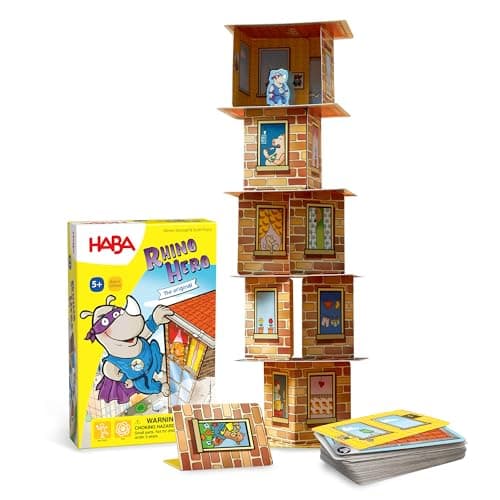 Rhino Hero2-4 players · 5-15 min · 5+ Rhino Hero2-4 players · 5-15 min · 5+ | Best when the ages are far apart | 8.7 | $14.99 - View on Amazon |
| 2 | 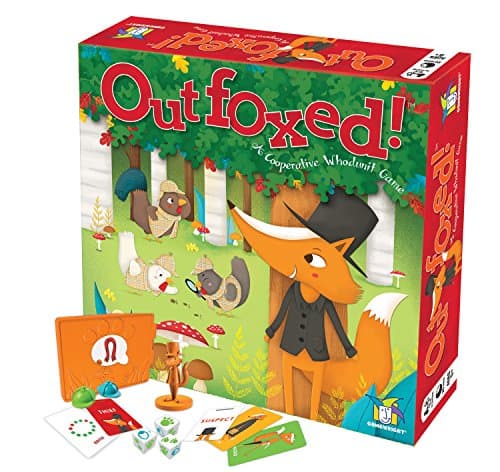 Outfoxed!2-4 players · 20 min · 5+ Outfoxed!2-4 players · 20 min · 5+ | Best when one of them cannot bear to lose | 8.9 | $24.00 - View on Amazon |
| 3 | 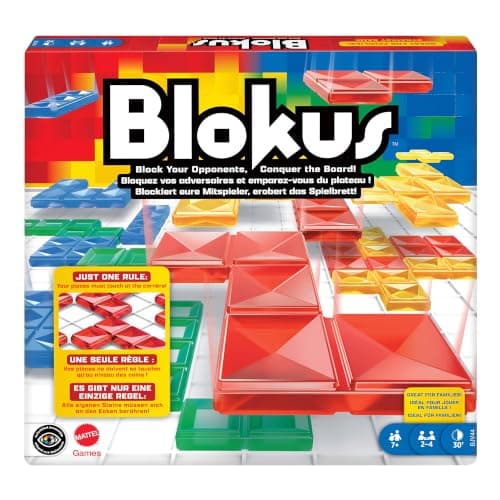 Blokus2-4 players · 20-30 min · 7+ Blokus2-4 players · 20-30 min · 7+ | Best with no reading and no luck | 8.1 | $19.97 - View on Amazon |
| 4 | 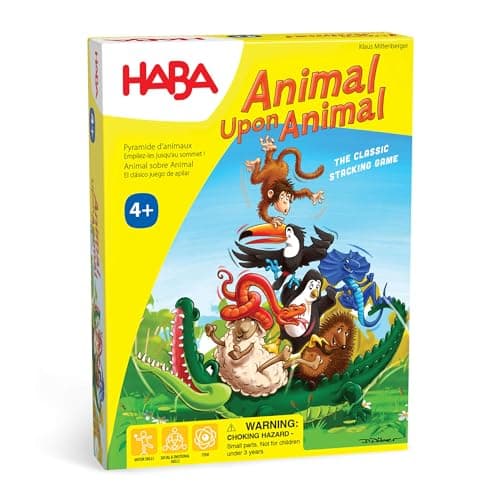 Animal Upon Animal2-4 players · 15 min · 4+ Animal Upon Animal2-4 players · 15 min · 4+ | Best for the younger one | 8.4 | $19.99 - View on Amazon |
| 5 | 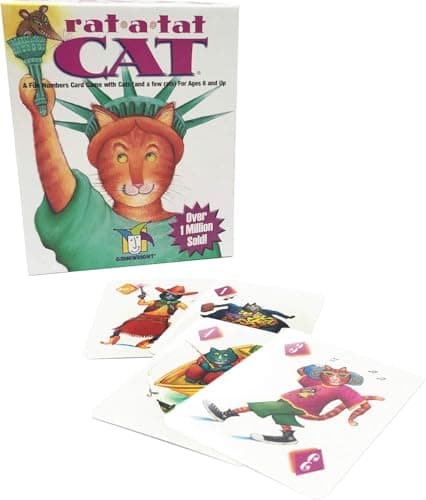 Rat-a-Tat Cat2-6 players · 20 min · 6+ Rat-a-Tat Cat2-6 players · 20 min · 6+ | Best first card game for two | 8.0 | $10.99 - View on Amazon |
| 6 | 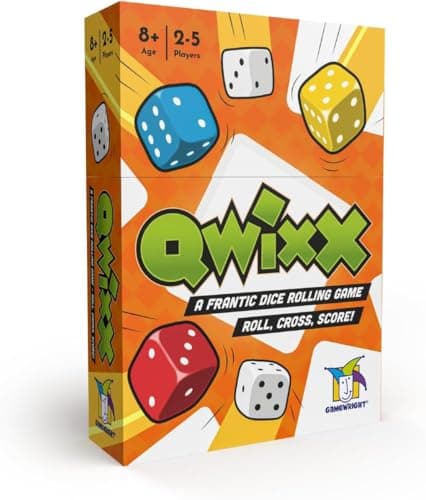 Qwixx2-5 players · 15 min · 8+ Qwixx2-5 players · 15 min · 8+ | Best where neither of them waits | 8.0 | $9.68 - View on Amazon |
| 7 | 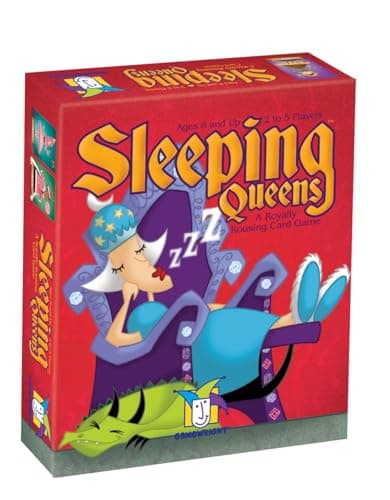 Sleeping Queens2-5 players · 20 min · 8+ Sleeping Queens2-5 players · 20 min · 8+ | Best for a reader and a nearly-reader | 8.1 | $11.99 - View on Amazon |
| 8 | 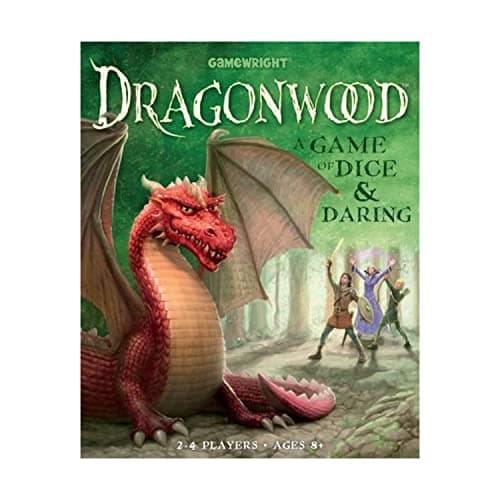 Dragonwood2-4 players · 20 min · 8+ Dragonwood2-4 players · 20 min · 8+ | Best they will both grow into | 7.9 | $20.00 - View on Amazon |
#1 - Best when the ages are far apart
Rhino Hero
HABA · A five-year-old who wants to win fairly
A tower you build out of bent cards until somebody knocks it over. HABA states 2 to 4 players, ages 5+, and 5 to 15 minutes, and it is one of the very few games where a five-year-old beats an adult without anybody letting them.
#ad Price as of October 18, 2026, from Amazon. Prices change. How we make money.
What it actually is
A stacking card game. You fold cards into walls, lay a roof card across them and pass the tower on, adding a floor each turn until it falls.
Does it fit this page?
HABA states 2-4 players, ages 5+, 5-15 minutes. A stacking game: a steady hand beats an extra three years of school, so a five-year-old genuinely beats a nine-year-old.
What the publisher states
| Figure | Value | Source |
|---|---|---|
| Players | 2-4 | HABA USA, published product page |
| Age | 5+ | HABA USA, published product page |
| Playing time | 5-15 min | HABA USA, published product page |
Read from the publisher’s own page. Where a publisher does not state a figure, there is no row for it here.
What is good about it
- The skill it asks for is a steady hand, so a five-year-old is not at a disadvantage
- Five to fifteen minutes, which is the right length for the age it is rated at
- The whole game is a deck of cards, so it packs into a bag
What is not
- It ends the instant the tower falls, which some children take badly
- There is no decision to make beyond where to place a card
- Caps at four players
Who should skip it
Skip it for a child who needs a game to end tidily - this one ends with a collapse, sometimes on the first turn - and skip it for a table that wants something to think about.
How it scored as a gift
- Easy to explain9.6
- Works for non-gamers9.4
- Group size range6.8
- Repeat plays8.2
- Feels like a gift8.0
Gift fit 8.7 / 10. That is our editorial judgment of how safe and well-aimed this is as a present, read off the published specifications - not a verdict on how good the game is, and not a test result. It is deliberately not marked up as a rating in this page’s structured data. How we pick.
#2 - Best when one of them cannot bear to lose
Outfoxed!
Gamewright · A five-year-old and an adult who has to play too
A cooperative whodunnit for young children. Gamewright's stated age floor is 5, and the children work together rather than against each other - which is the combination that makes it work as a first real game.
#ad Price as of October 18, 2026, from Amazon. Prices change. How we make money.
What it actually is
A cooperative deduction game. You gather clues and use a plastic decoder to eliminate suspects before the fox escapes.
Does it fit this page?
Gamewright states 2-4 players, ages 5+, 20 minutes. Cooperative - the two of them are solving the same case together, so there is no winner to argue about.
What the publisher states
| Figure | Value | Source |
|---|---|---|
| Players | 2-4 | Gamewright, published product page |
| Age | 5+ | Gamewright, published product page |
| Length | 20 min | Gamewright, published product page |
Read from the publisher’s own page. Where a publisher does not state a figure, there is no row for it here.
What is good about it
- Age floor of 5 with genuine deduction underneath it
- Cooperative, so a five-year-old does not lose to an adult
- Twenty minutes, which matches the attention span it is aimed at
What is not
- Adults playing without children will be bored
- The clue decoder is a small plastic part that can be lost
- Caps at four players
Who should skip it
Skip it for an adult game night. Outfoxed is aimed at young children and does not have a second layer for grown-ups.
How it scored as a gift
- Easy to explain9.2
- Works for non-gamers9.4
- Group size range6.8
- Repeat plays7.8
- Feels like a gift8.6
Gift fit 8.9 / 10. That is our editorial judgment of how safe and well-aimed this is as a present, read off the published specifications - not a verdict on how good the game is, and not a test result. It is deliberately not marked up as a rating in this page’s structured data. How we pick.
#3 - Best with no reading and no luck
Blokus
Mattel · A table where somebody cannot or would rather not read
Fit your colored shapes onto the board, touching your own pieces only at the corners. There is no reading, no text and nothing to remember, and Mattel's stated age floor is 7 for 2 to 4 players.
#ad Price as of October 18, 2026, from Amazon. Prices change. How we make money.
What it actually is
An abstract placement game. Everyone has a set of shapes; you take turns fitting them onto a shared grid until nobody can place anything.
Does it fit this page?
Mattel states 2-4 players, ages 7 and up. Pure shapes on a grid - nothing to read, nothing to count, and a younger child can see the whole game at once.
What the publisher states
| Figure | Value | Source |
|---|---|---|
| Players | 2-4 | Mattel Shop, published product page |
| Age | 7 years and up | Mattel Shop, published product page |
Read from the publisher’s own page. Where a publisher does not state a figure, there is no row for it here.
What is good about it
- Not one word of text anywhere in the box
- Works across a very wide age range at the same table
- The pieces are chunky and hard to damage
What is not
- Mattel does not publish a playing time on the product page, so we do not state one
- Purely spatial - people who find that hard find it very hard
- Best at exactly four; at two it is a different, thinner game
Who should skip it
Skip it for someone who finds spatial puzzles frustrating rather than satisfying. There is nothing else in this box to enjoy instead.
How it scored as a gift
- Easy to explain9.6
- Works for non-gamers9.2
- Group size range7.2
- Repeat plays8.0
- Feels like a gift8.0
Gift fit 8.1 / 10. That is our editorial judgment of how safe and well-aimed this is as a present, read off the published specifications - not a verdict on how good the game is, and not a test result. It is deliberately not marked up as a rating in this page’s structured data. How we pick.
#4 - Best for the younger one
Animal Upon Animal
HABA · A five-year-old and a four-year-old at the same table
A pile of little wooden animals, balanced one on top of another until it topples. HABA states 2 to 4 players, ages 4+, 15 minutes - a year below where most games start, and adults play it without having to pretend.
#ad Price as of October 18, 2026, from Amazon. Prices change. How we make money.
What it actually is
A wooden stacking game. You roll a die to find out how many animals to add, then balance them on the growing heap without bringing any down.
Does it fit this page?
HABA states 2-4 players, ages 4+, 15 minutes. The lowest stated age here by a year, and the wooden animals are the kind of component a four-year-old can actually hold.
What the publisher states
| Figure | Value | Source |
|---|---|---|
| Players | 2-4 | HABA USA, published product page |
| Age | 4+ | HABA USA, published product page |
| Playing time | 15 min | HABA USA, published product page |
Read from the publisher’s own page. Where a publisher does not state a figure, there is no row for it here.
What is good about it
- A stated floor of 4, so a five-year-old plays it comfortably rather than at the limit
- Nothing to read, nothing to count past three, and the rule is one sentence
- Painted wooden pieces, which look like a present in a way a deck of cards does not
What is not
- Pure dexterity - there is no decision in it at all
- Small wooden animals go under furniture and stay there
- Caps at four players
Who should skip it
Skip it for a child who is already playing games with rules and turns and wants more of that; this is a balancing game and it does not become anything else.
How it scored as a gift
- Easy to explain9.8
- Works for non-gamers9.6
- Group size range6.8
- Repeat plays7.6
- Feels like a gift8.6
Gift fit 8.4 / 10. That is our editorial judgment of how safe and well-aimed this is as a present, read off the published specifications - not a verdict on how good the game is, and not a test result. It is deliberately not marked up as a rating in this page’s structured data. How we pick.
#5 - Best first card game for two
Rat-a-Tat Cat
Gamewright · A six-year-old who is better at remembering than the adults are
A memory card game where the lowest score wins: get rid of the high cards, keep the low ones, and remember what is face-down in front of you. Gamewright states 2 to 6 players, ages 6+, about 20 minutes.
#ad Price as of October 18, 2026, from Amazon. Prices change. How we make money.
What it actually is
A card game played with four face-down cards each. You peek, draw, swap and use power cards to push your total down, then everyone reveals and the lowest score wins.
Does it fit this page?
Gamewright states 2-6 players, ages 6+, about 20 minutes. Memory and nerve rather than reading, and a round is short enough that losing one does not matter much.
What the publisher states
| Figure | Value | Source |
|---|---|---|
| Players | 2-6 | Gamewright, published product page |
| Age | 6+ | Gamewright, published product page |
| Playing time | about 20 min | Gamewright, published product page |
Read from the publisher’s own page. Where a publisher does not state a figure, there is no row for it here.
What is good about it
- A stated floor of 6, which is young for a card game with a real decision in it
- Memory is the skill it rewards, so children are genuinely competitive with adults
- Six players from a small, cheap box
What is not
- Adding up the final scores needs an adult for younger players
- There is a fair amount of luck in what you draw
- Teenagers will outgrow it quickly
Who should skip it
Skip it for a group of adults on their own - it is built around a young child's strengths, and without one at the table there is not much to it.
How it scored as a gift
- Easy to explain9.2
- Works for non-gamers9.2
- Group size range7.8
- Repeat plays7.4
- Feels like a gift7.2
Gift fit 8.0 / 10. That is our editorial judgment of how safe and well-aimed this is as a present, read off the published specifications - not a verdict on how good the game is, and not a test result. It is deliberately not marked up as a rating in this page’s structured data. How we pick.
#6 - Best where neither of them waits
Qwixx
Gamewright · A table where somebody always complains about waiting
Six dice, a pad of scoresheets, and fifteen minutes. Everybody uses every roll, so nobody is ever waiting for their turn - which is exactly why it works with grandparents and children at the same table.
#ad Price as of October 18, 2026, from Amazon. Prices change. How we make money.
What it actually is
A dice game. One person rolls, but every player marks something off their own sheet from that roll, so there is no downtime.
Does it fit this page?
Gamewright states 2-5 players, ages 8+, 15 minutes. Every player marks their own sheet on every roll, so the younger one is never sitting still watching the older one think.
What the publisher states
| Figure | Value | Source |
|---|---|---|
| Players | 2-5 | Gamewright, published product page |
| Age | 8+ | Gamewright, published product page |
| Length | 15 min | Gamewright, published product page |
Read from the publisher’s own page. Where a publisher does not state a figure, there is no row for it here.
What is good about it
- Nobody waits - every roll is used by every player
- The scoresheets make the rules self-explanatory
- Very cheap, and about as portable as a game gets
What is not
- It is a dice game; luck decides more than skill
- Score pads run out and need replacing
- Does not look like much when unwrapped
Who should skip it
Skip it for someone who wants meaningful decisions - Qwixx is mostly about making the best of what the dice gave you.
How it scored as a gift
- Easy to explain9.6
- Works for non-gamers9.4
- Group size range7.8
- Repeat plays8.0
- Feels like a gift6.6
Gift fit 8.0 / 10. That is our editorial judgment of how safe and well-aimed this is as a present, read off the published specifications - not a verdict on how good the game is, and not a test result. It is deliberately not marked up as a rating in this page’s structured data. How we pick.
#7 - Best for a reader and a nearly-reader
Sleeping Queens
Gamewright · A child who is just getting confident with adding up
A card game about waking up a row of queens who have fallen asleep, and one of the few family games where a young child's arithmetic is actually the fun part. Gamewright states 2 to 5 players, ages 8+, 20 minutes.
#ad Price as of October 18, 2026, from Amazon. Prices change. How we make money.
What it actually is
A card game. You play kings to wake the face-down queens, knights to steal a queen from another player, and simple number equations to swap cards out of your hand.
Does it fit this page?
Gamewright states 2-5 players, ages 8+, 20 minutes. The cards carry pictures and numbers, and an older sibling can read the few words out without that being an advantage.
What the publisher states
| Figure | Value | Source |
|---|---|---|
| Players | 2-5 | Gamewright, published product page |
| Age | 8+ | Gamewright, published product page |
| Playing time | 20 min | Gamewright, published product page |
Read from the publisher’s own page. Where a publisher does not state a figure, there is no row for it here.
What is good about it
- The number cards quietly turn simple addition into a winning move
- Knights and dragons give children a way to interact without anything harsh
- Twenty minutes in a small box, and one of the least expensive games we cover
What is not
- Adults playing without children will find it thin
- A lot of the result comes down to which cards you draw
- The theme is gentle to the point of whimsy, which some older children will call babyish
Who should skip it
Skip it for a household whose children are already eleven or twelve - the theme and the arithmetic are aimed younger, and Love Letter is the better card game at that age.
How it scored as a gift
- Easy to explain9.0
- Works for non-gamers9.0
- Group size range7.4
- Repeat plays7.6
- Feels like a gift7.8
Gift fit 8.1 / 10. That is our editorial judgment of how safe and well-aimed this is as a present, read off the published specifications - not a verdict on how good the game is, and not a test result. It is deliberately not marked up as a rating in this page’s structured data. How we pick.
#8 - Best they will both grow into
Dragonwood
Gamewright · A child who wants something to happen on their turn
Collect cards, then spend them to roll dice at a goblin. Gamewright states ages 8+, 2 to 4 players, 20 minutes - and the dice-rolling is what keeps a child at the table when a quieter game would lose them.
#ad Price as of October 18, 2026, from Amazon. Prices change. How we make money.
What it actually is
A card-and-dice game. You gather sets or runs of cards, then trade them in for dice to attack the creatures laid out in front of you.
Does it fit this page?
Gamewright states 2-4 players, ages 8+, 20 minutes. Dice and card combinations, with enough decision in it that a ten-year-old stays interested after the younger one has learned it.
What the publisher states
| Figure | Value | Source |
|---|---|---|
| Players | 2-4 | Gamewright, published product page |
| Age | 8+ | Gamewright, published product page |
| Length | 20 min | Gamewright, published product page |
Read from the publisher’s own page. Where a publisher does not state a figure, there is no row for it here.
What is good about it
- Rolling dice at a monster is a much easier sell to a child than set collection
- Twenty minutes, which is the right length for that audience
- Teaches sets and runs without ever calling them that
What is not
- Caps at four players
- The dice mean a well-planned turn can still fail
- Adults playing alone will find it slight
Who should skip it
Skip it for an adults-only game night - it is aimed squarely at families with children and it does not pretend otherwise.
How it scored as a gift
- Easy to explain8.8
- Works for non-gamers8.8
- Group size range7.0
- Repeat plays7.8
- Feels like a gift7.6
Gift fit 7.9 / 10. That is our editorial judgment of how safe and well-aimed this is as a present, read off the published specifications - not a verdict on how good the game is, and not a test result. It is deliberately not marked up as a rating in this page’s structured data. How we pick.
How these were picked
We have not played these games and we do not pretend to have. What we did was read each publisher’s own page, take their stated player count, playing time and age band, check that every pick genuinely fits the constraint in this page’s title, confirm it is still being sold, and pull a live price rather than a remembered one. Every figure here names the publisher it came from, so you can check it yourself in about a minute.
How we pick sets out the full method, including what would change a ranking.
Questions people ask
+−What board game is best for siblings of different ages?
A dexterity game, because being older barely helps. Rhino Hero is our pick - HABA states 2-4 players, ages 5+, 5-15 minutes - and Animal Upon Animal (HABA: 2-4 players, 4+, 15 minutes) does the same job for a younger pair. Both let the smaller child win genuinely rather than by being let.
+−What can a 6 and a 9 year old play together?
Rhino Hero, Outfoxed! and Blokus all work at that gap. Rhino Hero and Blokus test a steady hand and shape-spotting rather than reading, and Outfoxed! is cooperative so the two of them are on the same side. Avoid anything where the winner is whoever adds up fastest.
+−What board games can two children play without an adult?
Anything whose publisher states a floor of two and whose rules fit on a card - every pick on this page does both. Qwixx and Rat-a-Tat Cat are the easiest to start without help, because the scoresheet and the card backs do most of the explaining.
+−How do you stop siblings arguing over a board game?
Two things work. Pick a cooperative game so there is no winner - Outfoxed! is the one we recommend for this age. Or pick a game with very short rounds, so a loss is over in five minutes and they are dealing again before it becomes a grievance.
+−Should I buy for the older or the younger sibling?
The younger one, every time. A game pitched at the older child’s stated age band is a game the younger one cannot join, which turns a present for two children into a present for one. The older child will play a simpler game happily; the reverse is not true.
+−What is a good game for a brother and sister to play together?
Blokus, if they are both over seven - Mattel states 2-4 players and ages 7 and up, and there is not one word anywhere in the box, so neither of them has an advantage in reading. For a younger pair, Rhino Hero or Animal Upon Animal.