Roundup
Board Games Like Monopoly
Almost nobody searching this wants another Monopoly. They want the thing Monopoly promises - a proper board game the whole family plays - without the three hours and the player who went bankrupt at eight o'clock.
By Scooter M. · Published · Last updated
How this page is funded: the buy links below are affiliate links. If you buy through one, we earn a commission at no extra cost to you. It does not change the order of the picks or what we say about them. Full disclosure.
Games we claim to have play-tested: 0. Every gift guide in this category implies a shelf of played games behind it. We do not have one, and we would rather say so. What we do instead is on this page: the publisher’s own player count, playing time and age band for every pick, cited to the publisher; a live price rather than a remembered one; and a plain answer on who should skip each game.
The short answer
The best game to buy instead of Monopoly is Ticket to Ride - Days of Wonder states 2-5 players, ages 8+, 30-60 minutes. It does the job Monopoly is supposed to do, in a third of the time, and nobody is eliminated. If what your family actually enjoyed was the haggling, buy CATAN (Catan Studio: 3-4 players, ages 10+, 60-90 minutes), which is built entirely around trading.
Hasbro states ages 8+ and 2-6 players for the classic Monopoly game, and it is one of the best-selling board games ever made. It is also the game most people name when you ask them why they do not play board games - which is the reason this page exists.
What actually goes wrong with Monopoly
Worth naming, because the answer determines which of the eight below you should buy.
It takes too long for what happens. Most of a long Monopoly game is spent after the outcome is decided, rolling dice to see how slowly you lose. Every game on this page is between fifteen minutes and an hour and a half, and most are around thirty to forty-five minutes.
Players get knocked out and have to watch. Going bankrupt removes you from the table while everyone else keeps playing, and it usually happens to the youngest person. Not one of the eight picks below eliminates a player.
The leader runs away with it. Once somebody owns the good properties, the game reinforces their lead every time anybody moves. Modern designs deliberately keep the players close together until the end.
Very little of it is a decision. You roll, you move, you mostly do what the square tells you. The games here ask you to choose something on every single turn.
How these eight were chosen
Three tests. First, it has to do the same job - a real game that a family sits down to play together, not a card filler pretending to be one. Second, no player elimination, without exception. Third, the publisher has to state its own player count, age and playing time, so you can check the fit before buying rather than after.
Every figure on this page is the publisher’s own, read from their page and attributed to them. We have not play-tested these; what we do instead is on how we pick.
| Game | Players | Time | Age | Publisher |
|---|---|---|---|---|
| Sushi Go! | 2-5 | 15 min | 8+ | Gamewright |
| Splendor | 2-4 | 30 min | 10+ | Space Cowboys |
| Carcassonne | 2-5 | 30-45 min | 7+ | Z-Man Games |
| Pandemic | 2-4 | 45 min | 8+ | Z-Man Games |
| Cascadia | 1-4 | 45 minutes | 10+ years | Alderac Entertainment Group |
| Ticket to Ride | 2-5 | 30-60 min | 8+ | Days of Wonder |
| CATAN | 3-4 | 60-90 min | 10+ | Catan Studio |
| Blokus | 2-4 | not published | 7 years and up | Mattel |
Mattel does not publish a playing time for Blokus, so that cell says so rather than carrying a figure we invented.
Which part of Monopoly were you trying to keep?
“We liked doing deals.” CATAN. Catan Studio states 3-4 players and 60-90 minutes, and the trading is not a side activity - you physically cannot win without asking other people for things. It is the only game here that recreates the part of Monopoly people are actually nostalgic for.
“We liked watching our money go up.” Splendor. Space Cowboys states 2-4 players and 30 minutes, and the whole game is accumulating something that makes the next thing cheaper. It is the growth curve without the rent.
“We liked having a board.” Ticket to Ride or Carcassonne. Both put a map on the table that changes as you play, which is most of what makes a board game feel like an occasion rather than a card game.
“We liked the idea and hated the evening.” Pandemic. Z-Man states 2-4 players, ages 8+, 45 minutes, and everyone is on the same side. If Monopoly ended in a row at your house, this is the structural answer rather than a diplomatic one.
The shorter, cheaper end
Two of these are not really Monopoly replacements in the sense of a big box on the table, and they are here because for many households they are the honest answer.
Sushi Go! costs a fraction of the others and runs fifteen minutes by Gamewright’s clock. If the real reason Monopoly failed was that nobody would commit an evening, a fifteen-minute game that gets played weekly beats a beautiful ninety-minute one that stays in the cupboard.
Blokus has no text anywhere in the box and a stated floor of 7, which makes it the pick for exactly the table Monopoly is usually dragged out for - a grandparent, two adults and a child, none of whom want to read a rulebook. Our Blokus review goes through what it does and does not do.
What to expect on price
Modern family games cost more than a supermarket Monopoly and less than people expect - the big boxes here sit in one band and the card games in another well below it. The honest way to think about it is per evening rather than per box: a game that comes out twenty times is cheaper than a cheaper one that comes out twice. We never print a remembered price anywhere on this site; each pick’s button shows a live figure when we hold one and says so plainly when we do not. Our picks under $30 and under $50 start from the number instead.
Where to go next
If the household has now played one of these and wants a second, board games like CATAN and board games like Ticket to Ride pick up from those two specifically. If nobody in the house plays board games at all, our page for non-gamers is a gentler starting point than any of the above.
Quick picks
Ranked on how well each one fits the job in this page’s title, using the publisher’s own player count, playing time and age band. Tap any row for the full write-up, including who should skip it.
| # | Product | Best for | Gift fit | Price |
|---|---|---|---|---|
| 1 | 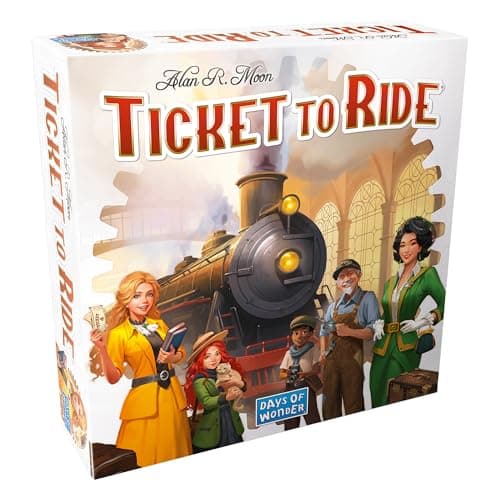 Ticket to Ride2-5 players · 30-60 min · 8+ Ticket to Ride2-5 players · 30-60 min · 8+ | Best replacement overall | 9.5 | $39.99 - View on Amazon |
| 2 | 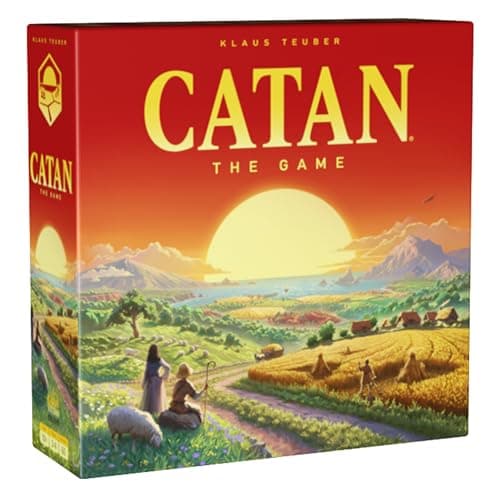 CATAN3-4 players · 60-90 min · 10+ CATAN3-4 players · 60-90 min · 10+ | Best if you liked the trading | 8.3 | $39.99 - View on Amazon |
| 3 | 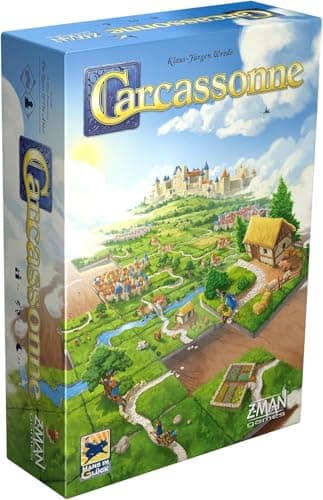 Carcassonne2-5 players · 30-45 min · 7+ Carcassonne2-5 players · 30-45 min · 7+ | Best if it needs to be shorter | 8.8 | $31.99 - View on Amazon |
| 4 | 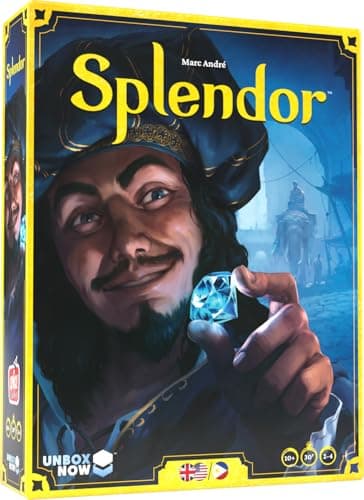 Splendor2-4 players · 30 min · 10+ Splendor2-4 players · 30 min · 10+ | Best if you liked building up money | 8.7 | $31.99 - View on Amazon |
| 5 | 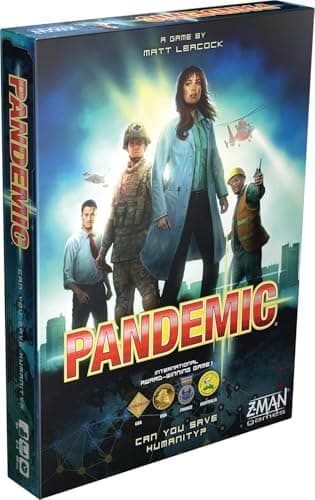 Pandemic2-4 players · 45 min · 8+ Pandemic2-4 players · 45 min · 8+ | Best if Monopoly caused arguments | 8.5 | $44.99 - View on Amazon |
| 6 | 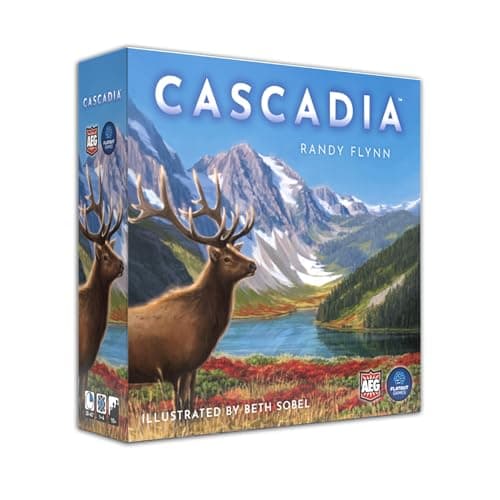 Cascadia1-4 players · 45 min · 10+ Cascadia1-4 players · 45 min · 10+ | Best if you want nobody attacking anybody | 8.6 | $37.40 - View on Amazon |
| 7 | 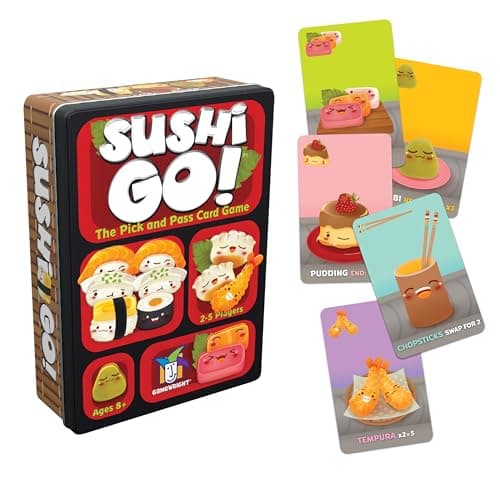 Sushi Go!2-5 players · 15 min · 8+ Sushi Go!2-5 players · 15 min · 8+ | Best cheap way out | 8.9 | $11.99 - View on Amazon |
| 8 | 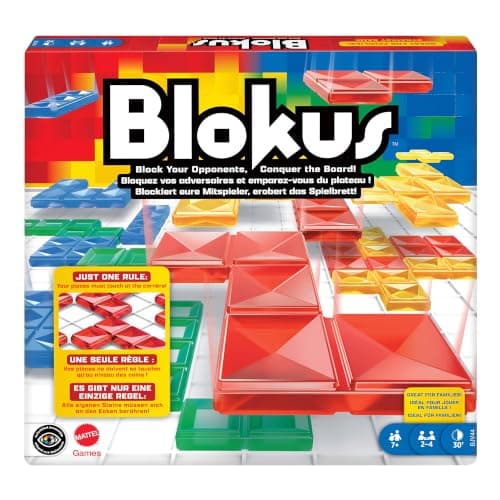 Blokus2-4 players · 20-30 min · 7+ Blokus2-4 players · 20-30 min · 7+ | Best across a wide age range | 8.1 | $19.97 - View on Amazon |
#1 - Best replacement overall
Ticket to Ride
Days of Wonder · A household that owns no board games at all
The default answer to 'we want a proper board game and nobody here plays board games'. You collect colored cards and use them to claim railway routes across a map of the United States. That is the whole idea, and it is enough.
#ad Price as of October 15, 2026, from Amazon. Prices change. How we make money.
What it actually is
A route-building game. You gather sets of matching cards and spend them to place little plastic trains along the lines between cities.
Does it fit this page?
Days of Wonder states 2-5 players, ages 8+, 30-60 minutes. The same job as Monopoly - a real board on the table, the whole family playing - in a third of the time and with nobody knocked out.
What the publisher states
| Figure | Value | Source |
|---|---|---|
| Players | 2-5 | Days of Wonder, published game page |
| Age | 8+ | Days of Wonder, published game page |
| Playing time | 30-60 min | Days of Wonder, published game page |
Read from the publisher’s own page. Where a publisher does not state a figure, there is no row for it here.
What is good about it
- One of the shortest explanations of any full-size board game: collect cards, claim routes
- Two to five players from one box, and it is decent at every count in that range
- The map and the trains do a lot of the work of making it feel like an occasion
What is not
- Someone can take the route you needed, and new players take that badly
- At the 60-minute end it outstays its welcome with restless players
- The plastic trains are small enough to lose under a sofa
Who should skip it
Skip it for a group of six or more - the box stops at five - and skip it for someone who wants a fifteen-minute game.
How it scored as a gift
- Easy to explain9.0
- Works for non-gamers9.6
- Group size range8.6
- Repeat plays9.0
- Feels like a gift9.8
Gift fit 9.5 / 10. That is our editorial judgment of how safe and well-aimed this is as a present, read off the published specifications - not a verdict on how good the game is, and not a test result. It is deliberately not marked up as a rating in this page’s structured data. How we pick.
#2 - Best if you liked the trading
CATAN
Catan Studio · Someone who has heard of it and wants to finally play it
The famous one. Catan Studio states 3 to 4 players and 60 to 90 minutes, and both of those numbers matter more than its reputation does: it does not play at two, and it is the longest evening on this list.
#ad Price as of October 15, 2026, from Amazon. Prices change. How we make money.
What it actually is
You settle an island, collect wood, brick, wheat, sheep and ore as dice are rolled, and trade with the other players to build roads and towns.
Does it fit this page?
Catan Studio states 3-4 players, ages 10+, 60-90 minutes. Negotiating with other players for what you need is the part of Monopoly people genuinely miss, and this is the game built entirely around it.
What the publisher states
| Figure | Value | Source |
|---|---|---|
| Players | 3-4 | Catan Studio, published game page |
| Age | 10+ | Catan Studio, published game page |
| Playing time | 60-90 min | Catan Studio, published game page |
Read from the publisher’s own page. Where a publisher does not state a figure, there is no row for it here.
What is good about it
- Name recognition, which genuinely matters for a gift - people want to try it
- Trading means the table talks constantly rather than staring at their own board
- Catan Studio sells a 5-6 player extension separately, so the ceiling can be raised later
What is not
- Three players minimum from the base box - a couple cannot play it
- Sixty to ninety minutes is a real commitment for a first game
- Bad dice luck can leave one player doing nothing for long stretches
Who should skip it
Skip it for a couple, and skip it for a group that wants to finish in half an hour. Both of those are the publisher's own numbers, not our opinion.
How it scored as a gift
- Easy to explain7.4
- Works for non-gamers8.0
- Group size range6.4
- Repeat plays9.0
- Feels like a gift9.6
Gift fit 8.3 / 10. That is our editorial judgment of how safe and well-aimed this is as a present, read off the published specifications - not a verdict on how good the game is, and not a test result. It is deliberately not marked up as a rating in this page’s structured data. How we pick.
#3 - Best if it needs to be shorter
Carcassonne
Z-Man Games · A family with a genuinely mixed age range
You draw a tile, you put it down so the roads and fields line up, and sometimes you put a little wooden person on it. Z-Man's stated age floor is 7, the lowest of any full board game here, and it plays two to five.
#ad Price as of October 15, 2026, from Amazon. Prices change. How we make money.
What it actually is
A tile-laying game. The board is built as you play, one square tile at a time, and you claim the roads, cities and fields you help complete.
Does it fit this page?
Z-Man states 2-5 players, ages 7+, 30-45 minutes. One tile a turn, a map that builds in front of everyone, and a lower stated age than Monopoly's own 8+.
What the publisher states
| Figure | Value | Source |
|---|---|---|
| Players | 2-5 | Z-Man Games, published product page |
| Age | 7+ | Z-Man Games, published product page |
| Playing time | 30-45 min | Z-Man Games, published product page |
Read from the publisher’s own page. Where a publisher does not state a figure, there is no row for it here.
What is good about it
- An age floor of 7 with no reading required at all
- Genuinely playable at two, which most family games are not
- No two games start the same, because the board is different every time
What is not
- Field scoring at the end confuses almost everybody the first time
- A run of unhelpful tiles feels like bad luck rather than a decision
- The little wooden figures are exactly the size a toddler will eat
Who should skip it
Skip it for a group of six or more, and skip it for anyone who wants the scoring to be obvious - the farms rule is the one everybody argues about.
How it scored as a gift
- Easy to explain8.6
- Works for non-gamers9.0
- Group size range8.6
- Repeat plays9.2
- Feels like a gift8.8
Gift fit 8.8 / 10. That is our editorial judgment of how safe and well-aimed this is as a present, read off the published specifications - not a verdict on how good the game is, and not a test result. It is deliberately not marked up as a rating in this page’s structured data. How we pick.
#4 - Best if you liked building up money
Splendor
Space Cowboys · Someone who likes the idea of getting better at something
Take chips, buy cards, and the cards you bought make future cards cheaper. Thirty minutes by the publisher's clock, satisfying in the way a good puzzle is, and it has the nicest components of anything at this price.
#ad Price as of October 15, 2026, from Amazon. Prices change. How we make money.
What it actually is
A card-buying game. You collect gem chips, spend them on cards, and each card you own permanently reduces the cost of everything you buy afterwards.
Does it fit this page?
Space Cowboys states 2-4 players, ages 10+, 30 minutes. Chips buy cards, cards make chips cheaper - the getting-richer feeling from Monopoly, with the property auctions and the bankruptcy removed.
What the publisher states
| Figure | Value | Source |
|---|---|---|
| Players | 2-4 | Space Cowboys, published game page |
| Age | 10+ | Space Cowboys, published game page |
| Length | 30 min | Space Cowboys, published game page |
Read from the publisher’s own page. Where a publisher does not state a figure, there is no row for it here.
What is good about it
- The weighted poker-style chips make it feel far more expensive than it is
- Almost no text on any component, so it crosses languages easily
- Thirty minutes and a clean finish - it never drags
What is not
- Quiet and solitary; players mostly work on their own tableau
- One card at the wrong moment can undo a plan, which some find unfair
- Caps at four
Who should skip it
Skip it for a group that wants to talk to each other. Splendor is a thinking game played in near-silence, and party-game people find it flat.
How it scored as a gift
- Easy to explain8.8
- Works for non-gamers8.6
- Group size range7.4
- Repeat plays8.8
- Feels like a gift9.4
Gift fit 8.7 / 10. That is our editorial judgment of how safe and well-aimed this is as a present, read off the published specifications - not a verdict on how good the game is, and not a test result. It is deliberately not marked up as a rating in this page’s structured data. How we pick.
#5 - Best if Monopoly caused arguments
Pandemic
Z-Man Games · A family where losing is taken personally
Everyone plays on the same side against the board, which removes the single biggest reason board game gifts fail: somebody has to lose. Z-Man states 2 to 4 players, ages 8+, 45 minutes.
#ad Price as of October 15, 2026, from Amazon. Prices change. How we make money.
What it actually is
A cooperative game. Diseases spread across a world map each turn and the players, each with a different special ability, work together to contain them.
Does it fit this page?
Z-Man states 2-4 players, ages 8+, 45 minutes. Everyone plays on the same side against the board, so the family cannot fall out over a trade - the structural fix for the usual Monopoly evening.
What the publisher states
| Figure | Value | Source |
|---|---|---|
| Players | 2-4 | Z-Man Games, published product page |
| Age | 8+ | Z-Man Games, published product page |
| Playing time | 45 min | Z-Man Games, published product page |
Read from the publisher’s own page. Where a publisher does not state a figure, there is no row for it here.
What is good about it
- Nobody loses to anybody else, which suits competitive families remarkably well
- Different roles each game, so it does not repeat
- Losing together is genuinely fun, which is a strange and useful property
What is not
- One confident player can end up telling everyone else what to do
- You will lose the first few times, and some recipients hate that
- Caps at four
Who should skip it
Skip it for a group with one dominant personality - cooperative games are where that becomes a problem, not where it gets solved.
How it scored as a gift
- Easy to explain7.8
- Works for non-gamers8.4
- Group size range7.0
- Repeat plays8.8
- Feels like a gift9.0
Gift fit 8.5 / 10. That is our editorial judgment of how safe and well-aimed this is as a present, read off the published specifications - not a verdict on how good the game is, and not a test result. It is deliberately not marked up as a rating in this page’s structured data. How we pick.
#6 - Best if you want nobody attacking anybody
Cascadia
Alderac Entertainment Group · Someone who might end up playing on their own
You build a landscape out of hexagonal tiles and place animals on it to score patterns. AEG states 1 to 4 players and 45 minutes, and the 1 matters: this is a rare gift that a person living alone can actually use.
#ad Price as of October 15, 2026, from Amazon. Prices change. How we make money.
What it actually is
A tile-laying puzzle. You take a habitat tile and an animal token together, place both, and score for the shapes the animals end up in.
Does it fit this page?
Alderac states 1-4 players, ages 10+ years, 45 minutes. Take a tile, place a tile, score patterns. Nobody can take anything from you, and it plays solo when nobody else is free.
What the publisher states
| Figure | Value | Source |
|---|---|---|
| Players | 1-4 | Alderac Entertainment Group, published game page |
| Age | 10+ years | Alderac Entertainment Group, published game page |
| Playing time | 45 minutes | Alderac Entertainment Group, published game page |
Read from the publisher’s own page. Where a publisher does not state a figure, there is no row for it here.
What is good about it
- A real solo mode, printed on the box, not an afterthought
- Calm and unaggressive - nobody takes anything from anybody
- The scoring cards change between games, so it does not go stale
What is not
- Quiet to the point of being solitary, even with four people
- The scoring cards take a first game to understand
- Nothing dramatic ever happens, which some players want
Who should skip it
Skip it for a group that wants interaction or conflict. In Cascadia everyone tends their own board and the winner is announced at the end.
How it scored as a gift
- Easy to explain8.4
- Works for non-gamers8.4
- Group size range8.2
- Repeat plays9.0
- Feels like a gift9.0
Gift fit 8.6 / 10. That is our editorial judgment of how safe and well-aimed this is as a present, read off the published specifications - not a verdict on how good the game is, and not a test result. It is deliberately not marked up as a rating in this page’s structured data. How we pick.
#7 - Best cheap way out
Sushi Go!
Gamewright · A small, cheap gift that is actually good
A tin of cards, fifteen minutes, and one of the best value-for-money gifts in the whole category. You pass hands of cards around and try to collect the sets that score well together.
#ad Price as of October 15, 2026, from Amazon. Prices change. How we make money.
What it actually is
A card game where you pick one card from your hand, pass the rest to your neighbor, and repeat - so every hand you see has already been picked over.
Does it fit this page?
Gamewright states 2-5 players, ages 8+, 15 minutes. If the real problem is that nobody will sit down for an hour, this is fifteen minutes in a tin for a fraction of the price.
What the publisher states
| Figure | Value | Source |
|---|---|---|
| Players | 2-5 | Gamewright, published product page |
| Age | 8+ | Gamewright, published product page |
| Length | 15 min | Gamewright, published product page |
Read from the publisher’s own page. Where a publisher does not state a figure, there is no row for it here.
What is good about it
- Fits in a coat pocket, so it travels and it fits a stocking
- Fifteen minutes means a household plays it three times in a sitting
- Cheap enough to give alongside something else
What is not
- Caps at five - Sushi Go Party! is the version that seats eight
- Scoring is fiddly the first time through
- Almost too small to feel like a main present on its own
Who should skip it
Skip it as a sole main gift for an adult - it reads as a stocking filler no matter how good it is. Give it alongside something larger.
How it scored as a gift
- Easy to explain9.2
- Works for non-gamers9.2
- Group size range7.8
- Repeat plays8.6
- Feels like a gift7.4
Gift fit 8.9 / 10. That is our editorial judgment of how safe and well-aimed this is as a present, read off the published specifications - not a verdict on how good the game is, and not a test result. It is deliberately not marked up as a rating in this page’s structured data. How we pick.
#8 - Best across a wide age range
Blokus
Mattel · A table where somebody cannot or would rather not read
Fit your colored shapes onto the board, touching your own pieces only at the corners. There is no reading, no text and nothing to remember, and Mattel's stated age floor is 7 for 2 to 4 players.
#ad Price as of October 15, 2026, from Amazon. Prices change. How we make money.
What it actually is
An abstract placement game. Everyone has a set of shapes; you take turns fitting them onto a shared grid until nobody can place anything.
Does it fit this page?
Mattel states 2-4 players and ages 7 years and up, with no text anywhere in the box. The pick when the Monopoly table was a seven-year-old, two adults and a grandparent.
What the publisher states
| Figure | Value | Source |
|---|---|---|
| Players | 2-4 | Mattel Shop, published product page |
| Age | 7 years and up | Mattel Shop, published product page |
Read from the publisher’s own page. Where a publisher does not state a figure, there is no row for it here.
What is good about it
- Not one word of text anywhere in the box
- Works across a very wide age range at the same table
- The pieces are chunky and hard to damage
What is not
- Mattel does not publish a playing time on the product page, so we do not state one
- Purely spatial - people who find that hard find it very hard
- Best at exactly four; at two it is a different, thinner game
Who should skip it
Skip it for someone who finds spatial puzzles frustrating rather than satisfying. There is nothing else in this box to enjoy instead.
How it scored as a gift
- Easy to explain9.6
- Works for non-gamers9.2
- Group size range7.2
- Repeat plays8.0
- Feels like a gift8.0
Gift fit 8.1 / 10. That is our editorial judgment of how safe and well-aimed this is as a present, read off the published specifications - not a verdict on how good the game is, and not a test result. It is deliberately not marked up as a rating in this page’s structured data. How we pick.
How these were picked
We have not played these games and we do not pretend to have. What we did was read each publisher’s own page, take their stated player count, playing time and age band, check that every pick genuinely fits the constraint in this page’s title, confirm it is still being sold, and pull a live price rather than a remembered one. Every figure here names the publisher it came from, so you can check it yourself in about a minute.
How we pick sets out the full method, including what would change a ranking.
Questions people ask
+−What board game is most like Monopoly but better?
CATAN, if what you liked was trading and negotiating - Catan Studio states 3-4 players, ages 10+, 60-90 minutes. Ticket to Ride is the better all-round replacement for most families (Days of Wonder: 2-5 players, 8+, 30-60 minutes): shorter, easier to teach, and nobody is eliminated.
+−What can I play instead of Monopoly with young children?
Carcassonne (Z-Man Games: 2-5 players, 7+, 30-45 minutes) or Blokus (Mattel: 2-4 players, 7 years and up). Both have a lower stated age than Monopoly’s own 8+, both are much shorter, and neither knocks anyone out of the game.
+−Why do people dislike Monopoly?
Four reasons, all structural: it runs long after the winner is obvious, bankrupt players are eliminated and have to watch, the leader’s advantage compounds, and most turns involve no decision. Every game on this page fixes at least two of those.
+−Is there a Monopoly-style game where nobody gets knocked out?
All eight picks here keep every player in until the end. If avoiding conflict entirely is the goal, Cascadia (Alderac: 1-4 players, 45 minutes) and Pandemic (Z-Man: 2-4 players, 8+, 45 minutes) go furthest - in one nobody can touch your board, in the other everyone is on the same side.
+−Should I just buy a shorter version of Monopoly?
Hasbro does sell faster editions, and they do shorten the game. They do not change the parts people object to most - the rolling, the elimination and the runaway leader. For the same money, a modern family game gives you a different evening rather than a shorter version of the same one.