Roundup
The Best Board Games for Non-Gamers
The whole site is written for this reader, so this is the page that matters most. Every pick here teaches in about a minute and does not need anybody to have played anything before.
By Scooter M. · Published · Last updated
How this page is funded: the buy links below are affiliate links. If you buy through one, we earn a commission at no extra cost to you. It does not change the order of the picks or what we say about them. Full disclosure.
Games we claim to have play-tested: 0. Every gift guide in this category implies a shelf of played games behind it. We do not have one, and we would rather say so. What we do instead is on this page: the publisher’s own player count, playing time and age band for every pick, cited to the publisher; a live price rather than a remembered one; and a plain answer on who should skip each game.
The short answer
For someone who does not play board games, buy Codenames. Czech Games Edition states 4-8+ players and 15 minutes; the rule is one sentence and there is no board, no pieces and nothing to set up. If there will only be two or three of them, buy Ticket to Ride instead - Days of Wonder states 2-5 players and 30 to 60 minutes.
Board games fail as gifts in one specific way, and it is not that the game was bad. It is that somebody had to read a rulebook out loud for twenty minutes while everyone else waited, and by the time the game started the evening had already decided against it.
So the only question that matters for this reader is: how long from the box opening to the first proper turn? Everything on this page is under three minutes. Most of them are under one.
What makes a game safe for someone who does not play games
One central idea. Codenames is “give a one-word clue”. Just One is “write a clue nobody else writes”. Ticket to Ride is “collect matching cards, spend them on routes”. If a game needs three sentences to explain, it needs ten minutes to teach.
No reading during play. A game where each card does something different is a game where every turn stops while somebody reads. Sushi Go!, Ticket to Ride and Carcassonne all have almost nothing to read once you have started.
Short enough to play twice. The first game of anything is practice. The second one is where a person decides whether they like board games. Six of these eight are 20 minutes or less by the publisher’s own clock, specifically so the second game happens.
| Game | Players | Playing time | Publisher |
|---|---|---|---|
| Codenames | 4-8+ | 15 min | Czech Games Edition |
| Sushi Go! | 2-5 | 15 min | Gamewright |
| Qwixx | 2-5 | 15 min | Gamewright |
| Just One | 3-7 | 20 min | Repos Production |
| Herd Mentality | 4-20 | 20 min | Big Potato Games |
| Skull | 3-6 | 30 min | Space Cowboys |
| Carcassonne | 2-5 | 30-45 min | Z-Man Games |
| Ticket to Ride | 2-5 | 30-60 min | Days of Wonder |
How to choose between them
Count the people first. Codenames needs four (Czech Games Edition states 4-8+). Just One needs three. If the recipient is usually one or two people, go straight to Ticket to Ride, Sushi Go! or Carcassonne, all of which start at two.
Then decide whether you want a word game or a board game. Word games teach fastest and are the safest single gift, but they are also divisive - some people simply do not enjoy them and you cannot tell in advance. Ticket to Ride and Carcassonne are the picks with no word element at all, and the comparison between those two is the one most first-time buyers actually need.
And if the recipient does play, just not often, this is the cautious list rather than the right one - our picks for adults carry more weight, including the two games with a publisher-stated 14+ and 17+ rating.
If the recipient has said something like “I don’t really like board games”, that usually means one specific bad experience - a long game, a rules argument, or being eliminated early. Skull answers all three: about a page of rules, half an hour, and nobody is ever knocked out.
Quick picks
Ranked on how well each one fits the job in this page’s title, using the publisher’s own player count, playing time and age band. Tap any row for the full write-up, including who should skip it.
| # | Product | Best for | Gift fit | Price |
|---|---|---|---|---|
| 1 | 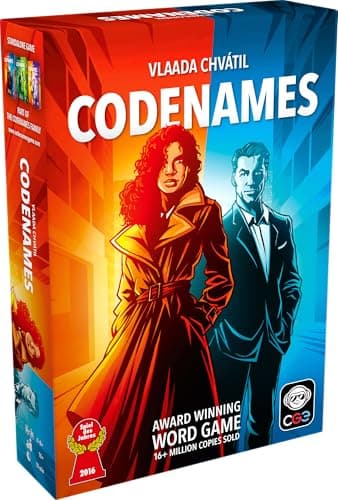 Codenames4-8 players · 15 min · 10+ Codenames4-8 players · 15 min · 10+ | Safest gift on this site | 9.6 | $24.97 - View on Amazon |
| 2 | 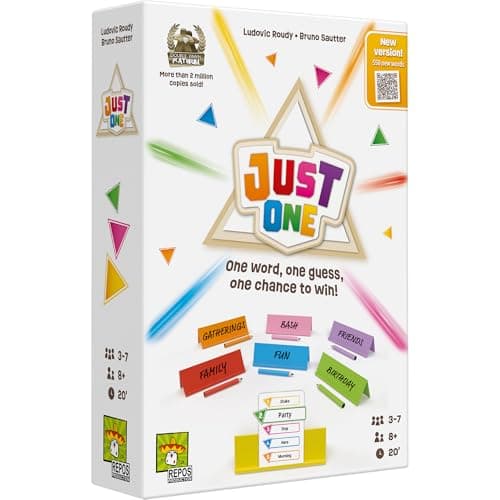 Just One3-7 players · 20 min · 8+ Just One3-7 players · 20 min · 8+ | Least intimidating | 9.3 | $24.99 - View on Amazon |
| 3 | 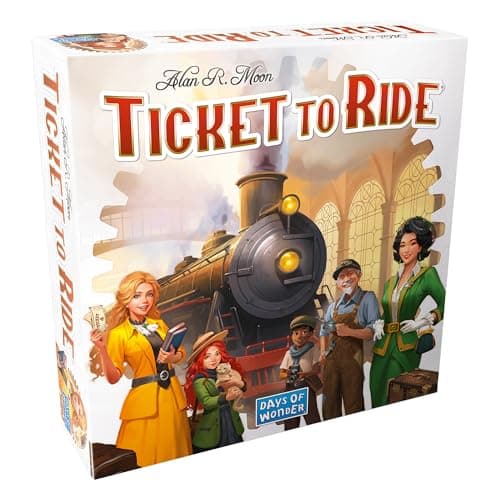 Ticket to Ride2-5 players · 30-60 min · 8+ Ticket to Ride2-5 players · 30-60 min · 8+ | Best first real board game | 9.5 | $39.99 - View on Amazon |
| 4 | 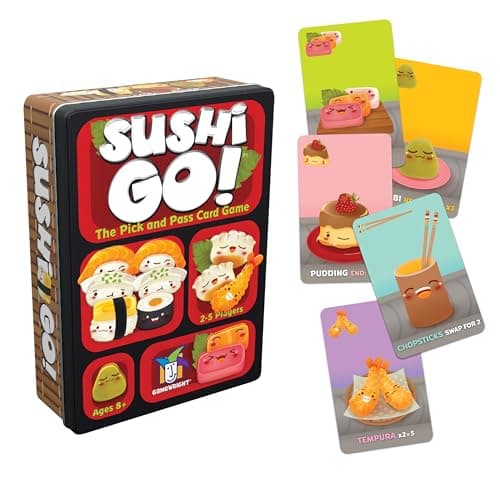 Sushi Go!2-5 players · 15 min · 8+ Sushi Go!2-5 players · 15 min · 8+ | Cheapest way to find out | 8.9 | $11.99 - View on Amazon |
| 5 | 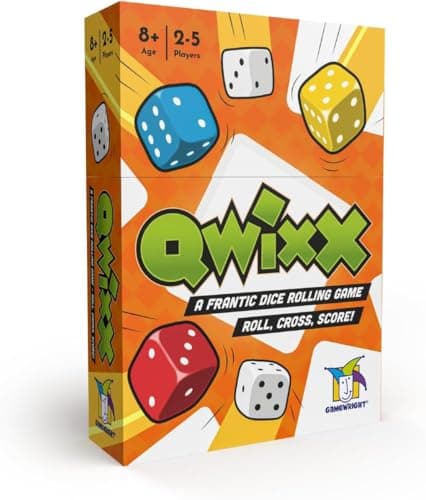 Qwixx2-5 players · 15 min · 8+ Qwixx2-5 players · 15 min · 8+ | Best for someone who hates waiting | 8.0 | $9.68 - View on Amazon |
| 6 | 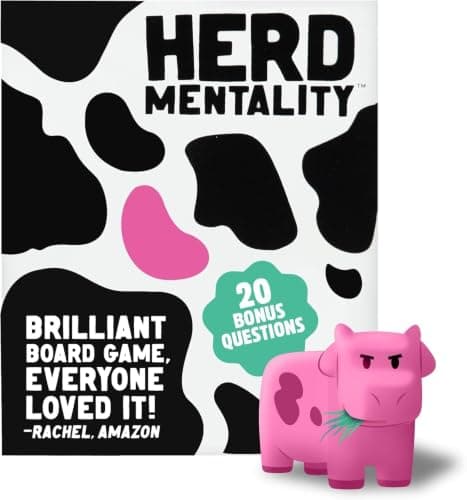 Herd Mentality4-20 players · 20 min · 10+ Herd Mentality4-20 players · 20 min · 10+ | Best when there is a crowd | 8.9 | $22.49 - View on Amazon |
| 7 | 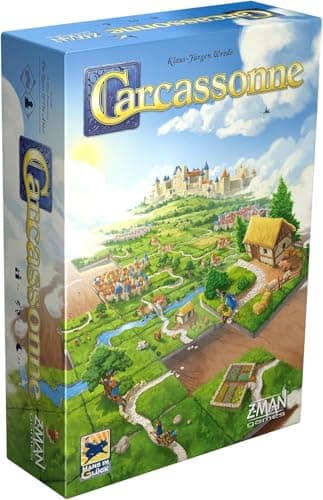 Carcassonne2-5 players · 30-45 min · 7+ Carcassonne2-5 players · 30-45 min · 7+ | Best second purchase | 8.8 | $31.99 - View on Amazon |
| 8 | 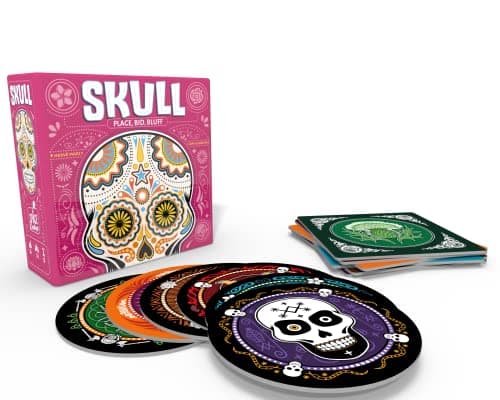 Skull3-6 players · 30 min · 10+ Skull3-6 players · 30 min · 10+ | Best for a skeptic | 7.9 | $16.79 - View on Amazon |
#1 - Safest gift on this site
Codenames
Czech Games Edition · The gift you give when you know almost nothing about the person
The single safest board game gift there is. Two teams, a grid of words, and one person giving one-word clues. It explains in about a minute, it works at four people or ten, and nobody has to read a rulebook to enjoy it.
#ad Price as of October 16, 2026, from Amazon. Prices change. How we make money.
What it actually is
A word game. The room splits into two teams; one person on each team can see which words belong to their side and gives a single-word clue to point their teammates at them.
Does it fit this page?
Czech Games Edition states 4-8+ players, 15 minutes. The rule is one sentence, and it is a word game rather than a board game.
What the publisher states
| Figure | Value | Source |
|---|---|---|
| Players | 4-8+ | Czech Games Edition, published game page |
| Age | 10+ | Czech Games Edition, published game page |
| Length | 15 min | Czech Games Edition, published game page |
Read from the publisher’s own page. Where a publisher does not state a figure, there is no row for it here.
What is good about it
- Teaches faster than almost anything else on this site - the core rule is one sentence
- Scales past its printed maximum, because extra people simply join a team
- Everyone talks, including the people who are losing
What is not
- The two clue-givers do most of the thinking; quiet guessers can drift
- Wants an even-ish split into two teams, so it is awkward at exactly three
- Word games do not suit everybody, and you cannot always tell in advance
Who should skip it
Skip it for a group of two or three - it wants teams. Skip it for someone who dislikes word games, or who is playing in a second language.
How it scored as a gift
- Easy to explain9.8
- Works for non-gamers9.7
- Group size range9.4
- Repeat plays9.2
- Feels like a gift8.8
Gift fit 9.6 / 10. That is our editorial judgment of how safe and well-aimed this is as a present, read off the published specifications - not a verdict on how good the game is, and not a test result. It is deliberately not marked up as a rating in this page’s structured data. How we pick.
#2 - Least intimidating
Just One
Repos Production · A mixed group where you would rather nobody lost
A cooperative word game with a lovely twist: everyone writes a one-word clue in secret, and any clue two people duplicated gets thrown away. It is warm rather than competitive, and it is very hard to dislike.
#ad Price as of October 16, 2026, from Amazon. Prices change. How we make money.
What it actually is
Everyone except the guesser writes a single-word clue for a hidden word. Matching clues cancel out, so the group is trying to be helpful and original at the same time.
Does it fit this page?
Repos Production states 3-7 players, 8+, 20 minutes, and everyone is on the same side.
What the publisher states
| Figure | Value | Source |
|---|---|---|
| Players | 3-7 | Repos Production, published game page |
| Age | 8+ | Repos Production, published game page |
| Length | 20 min | Repos Production, published game page |
Read from the publisher’s own page. Where a publisher does not state a figure, there is no row for it here.
What is good about it
- Cooperative, so one competitive relative cannot spoil it
- Works across a wide age range - the publisher's floor is 8
- Wipe-clean boards mean setup is opening the box
What is not
- Caps at seven, so it is the wrong pick for a real party
- Everyone needs to be able to write, which rules out the very young
- Rounds are short, so a long evening gets through a lot of cards
Who should skip it
Skip it for a party of ten or more - it stops working past seven. Herd Mentality or Codenames handle a crowd far better.
How it scored as a gift
- Easy to explain9.6
- Works for non-gamers9.6
- Group size range7.6
- Repeat plays8.8
- Feels like a gift8.6
Gift fit 9.3 / 10. That is our editorial judgment of how safe and well-aimed this is as a present, read off the published specifications - not a verdict on how good the game is, and not a test result. It is deliberately not marked up as a rating in this page’s structured data. How we pick.
#3 - Best first real board game
Ticket to Ride
Days of Wonder · A household that owns no board games at all
The default answer to 'we want a proper board game and nobody here plays board games'. You collect colored cards and use them to claim railway routes across a map of the United States. That is the whole idea, and it is enough.
#ad Price as of October 16, 2026, from Amazon. Prices change. How we make money.
What it actually is
A route-building game. You gather sets of matching cards and spend them to place little plastic trains along the lines between cities.
Does it fit this page?
Days of Wonder states 2-5 players, 8+, 30-60 minutes. Collect cards, claim routes - that is the whole game.
What the publisher states
| Figure | Value | Source |
|---|---|---|
| Players | 2-5 | Days of Wonder, published game page |
| Age | 8+ | Days of Wonder, published game page |
| Playing time | 30-60 min | Days of Wonder, published game page |
Read from the publisher’s own page. Where a publisher does not state a figure, there is no row for it here.
What is good about it
- One of the shortest explanations of any full-size board game: collect cards, claim routes
- Two to five players from one box, and it is decent at every count in that range
- The map and the trains do a lot of the work of making it feel like an occasion
What is not
- Someone can take the route you needed, and new players take that badly
- At the 60-minute end it outstays its welcome with restless players
- The plastic trains are small enough to lose under a sofa
Who should skip it
Skip it for a group of six or more - the box stops at five - and skip it for someone who wants a fifteen-minute game.
How it scored as a gift
- Easy to explain9.0
- Works for non-gamers9.6
- Group size range8.6
- Repeat plays9.0
- Feels like a gift9.8
Gift fit 9.5 / 10. That is our editorial judgment of how safe and well-aimed this is as a present, read off the published specifications - not a verdict on how good the game is, and not a test result. It is deliberately not marked up as a rating in this page’s structured data. How we pick.
#4 - Cheapest way to find out
Sushi Go!
Gamewright · A small, cheap gift that is actually good
A tin of cards, fifteen minutes, and one of the best value-for-money gifts in the whole category. You pass hands of cards around and try to collect the sets that score well together.
#ad Price as of October 16, 2026, from Amazon. Prices change. How we make money.
What it actually is
A card game where you pick one card from your hand, pass the rest to your neighbor, and repeat - so every hand you see has already been picked over.
Does it fit this page?
Gamewright states 2-5 players, 15 minutes, in a tin. Low commitment in every sense.
What the publisher states
| Figure | Value | Source |
|---|---|---|
| Players | 2-5 | Gamewright, published product page |
| Age | 8+ | Gamewright, published product page |
| Length | 15 min | Gamewright, published product page |
Read from the publisher’s own page. Where a publisher does not state a figure, there is no row for it here.
What is good about it
- Fits in a coat pocket, so it travels and it fits a stocking
- Fifteen minutes means a household plays it three times in a sitting
- Cheap enough to give alongside something else
What is not
- Caps at five - Sushi Go Party! is the version that seats eight
- Scoring is fiddly the first time through
- Almost too small to feel like a main present on its own
Who should skip it
Skip it as a sole main gift for an adult - it reads as a stocking filler no matter how good it is. Give it alongside something larger.
How it scored as a gift
- Easy to explain9.2
- Works for non-gamers9.2
- Group size range7.8
- Repeat plays8.6
- Feels like a gift7.4
Gift fit 8.9 / 10. That is our editorial judgment of how safe and well-aimed this is as a present, read off the published specifications - not a verdict on how good the game is, and not a test result. It is deliberately not marked up as a rating in this page’s structured data. How we pick.
#5 - Best for someone who hates waiting
Qwixx
Gamewright · A table where somebody always complains about waiting
Six dice, a pad of scoresheets, and fifteen minutes. Everybody uses every roll, so nobody is ever waiting for their turn - which is exactly why it works with grandparents and children at the same table.
#ad Price as of October 16, 2026, from Amazon. Prices change. How we make money.
What it actually is
A dice game. One person rolls, but every player marks something off their own sheet from that roll, so there is no downtime.
Does it fit this page?
Gamewright states 2-5 players, 15 minutes, and every player uses every roll.
What the publisher states
| Figure | Value | Source |
|---|---|---|
| Players | 2-5 | Gamewright, published product page |
| Age | 8+ | Gamewright, published product page |
| Length | 15 min | Gamewright, published product page |
Read from the publisher’s own page. Where a publisher does not state a figure, there is no row for it here.
What is good about it
- Nobody waits - every roll is used by every player
- The scoresheets make the rules self-explanatory
- Very cheap, and about as portable as a game gets
What is not
- It is a dice game; luck decides more than skill
- Score pads run out and need replacing
- Does not look like much when unwrapped
Who should skip it
Skip it for someone who wants meaningful decisions - Qwixx is mostly about making the best of what the dice gave you.
How it scored as a gift
- Easy to explain9.6
- Works for non-gamers9.4
- Group size range7.8
- Repeat plays8.0
- Feels like a gift6.6
Gift fit 8.0 / 10. That is our editorial judgment of how safe and well-aimed this is as a present, read off the published specifications - not a verdict on how good the game is, and not a test result. It is deliberately not marked up as a rating in this page’s structured data. How we pick.
#6 - Best when there is a crowd
Herd Mentality
Big Potato Games · A room with far too many people in it
Big Potato prints a player range of 4 to 20, and that number is most of the reason to buy it. You are trying to write the same answer as everybody else, which rewards being ordinary and is very funny in a full room.
#ad Price as of October 16, 2026, from Amazon. Prices change. How we make money.
What it actually is
A question gets read out, everyone writes an answer, and you score by matching the majority. The one person who answered differently collects the pink cow.
Does it fit this page?
Big Potato states 4-20 players, 20 minutes, with no strategy to learn at all.
What the publisher states
| Figure | Value | Source |
|---|---|---|
| Players | 4-20 | Big Potato Games, published product page |
| Age | 10+ | Big Potato Games, published product page |
| Length | 20 min | Big Potato Games, published product page |
Read from the publisher’s own page. Where a publisher does not state a figure, there is no row for it here.
What is good about it
- Twenty players is a genuinely rare ceiling, and it is the publisher's own figure
- One rule, no strategy to learn, nothing to read between turns
- Works while people are eating, which most games do not
What is not
- Rewards conformity by design, which some people find irritating rather than funny
- Question cards start repeating in a household that plays it weekly
- Very little to it at four players
Who should skip it
Skip it for two or three people. It needs a crowd to produce the majority it is built around, and it falls flat at a small table.
How it scored as a gift
- Easy to explain9.7
- Works for non-gamers9.5
- Group size range9.8
- Repeat plays7.4
- Feels like a gift8.2
Gift fit 8.9 / 10. That is our editorial judgment of how safe and well-aimed this is as a present, read off the published specifications - not a verdict on how good the game is, and not a test result. It is deliberately not marked up as a rating in this page’s structured data. How we pick.
#7 - Best second purchase
Carcassonne
Z-Man Games · A family with a genuinely mixed age range
You draw a tile, you put it down so the roads and fields line up, and sometimes you put a little wooden person on it. Z-Man's stated age floor is 7, the lowest of any full board game here, and it plays two to five.
#ad Price as of October 16, 2026, from Amazon. Prices change. How we make money.
What it actually is
A tile-laying game. The board is built as you play, one square tile at a time, and you claim the roads, cities and fields you help complete.
Does it fit this page?
Z-Man states 2-5 players, 7+, 30-45 minutes. Slightly more to it than the picks above, and worth it.
What the publisher states
| Figure | Value | Source |
|---|---|---|
| Players | 2-5 | Z-Man Games, published product page |
| Age | 7+ | Z-Man Games, published product page |
| Playing time | 30-45 min | Z-Man Games, published product page |
Read from the publisher’s own page. Where a publisher does not state a figure, there is no row for it here.
What is good about it
- An age floor of 7 with no reading required at all
- Genuinely playable at two, which most family games are not
- No two games start the same, because the board is different every time
What is not
- Field scoring at the end confuses almost everybody the first time
- A run of unhelpful tiles feels like bad luck rather than a decision
- The little wooden figures are exactly the size a toddler will eat
Who should skip it
Skip it for a group of six or more, and skip it for anyone who wants the scoring to be obvious - the farms rule is the one everybody argues about.
How it scored as a gift
- Easy to explain8.6
- Works for non-gamers9.0
- Group size range8.6
- Repeat plays9.2
- Feels like a gift8.8
Gift fit 8.8 / 10. That is our editorial judgment of how safe and well-aimed this is as a present, read off the published specifications - not a verdict on how good the game is, and not a test result. It is deliberately not marked up as a rating in this page’s structured data. How we pick.
#8 - Best for a skeptic
Skull
Space Cowboys · Proving to a skeptic that a board game can be tense
Four cards each and a bidding round. That is the whole game, and it produces more tension than boxes ten times the size. A very good gift for someone who says they do not like board games.
#ad Price as of October 16, 2026, from Amazon. Prices change. How we make money.
What it actually is
A bluffing game. You place discs face down, then bid on how many you can turn over without hitting a skull - including your own.
Does it fit this page?
Space Cowboys states 3-6 players, 30 minutes, and the rulebook is roughly a page.
What the publisher states
| Figure | Value | Source |
|---|---|---|
| Players | 3-6 | Space Cowboys, published game page |
| Age | 10+ | Space Cowboys, published game page |
| Length | 30 min | Space Cowboys, published game page |
Read from the publisher’s own page. Where a publisher does not state a figure, there is no row for it here.
What is good about it
- Probably the shortest rulebook of any game on this site
- No reading, no arithmetic, no cards to interpret
- Handsome components, so it presents well as a gift
What is not
- Almost nothing happens mechanically - the game is entirely people reading people
- Needs at least three, and is much better at five
- Players who dislike being bluffed will dislike this specifically
Who should skip it
Skip it for two people; the publisher's floor is three and it really needs more than that to breathe.
How it scored as a gift
- Easy to explain9.6
- Works for non-gamers8.8
- Group size range7.4
- Repeat plays8.2
- Feels like a gift8.4
Gift fit 7.9 / 10. That is our editorial judgment of how safe and well-aimed this is as a present, read off the published specifications - not a verdict on how good the game is, and not a test result. It is deliberately not marked up as a rating in this page’s structured data. How we pick.
How these were picked
We have not played these games and we do not pretend to have. What we did was read each publisher’s own page, take their stated player count, playing time and age band, check that every pick genuinely fits the constraint in this page’s title, confirm it is still being sold, and pull a live price rather than a remembered one. Every figure here names the publisher it came from, so you can check it yourself in about a minute.
How we pick sets out the full method, including what would change a ranking.
Questions people ask
+−What board game should I buy for someone who has never played board games?
Codenames. Czech Games Edition states 4-8+ players and 15 minutes, the rule is one sentence, and it is the game most likely to be played on the day it is given. If they will usually be playing with only one other person, Ticket to Ride is the better answer.
+−What is the easiest board game to learn?
Of the games we cover, Codenames, Herd Mentality and Happy Salmon each have a single rule. Our full easiest games to learn page ranks them by how long the explanation actually takes.
+−Are modern board games hard?
Some are and most gift-shelf ones are not. The games that get recommended to newcomers were designed in the last twenty years specifically to be taught in minutes - that is what changed. The difficulty is not in the rules, it is in picking a box whose rules match the room.
+−How can I tell if a board game is too complicated before I buy it?
Check the publisher’s stated playing time, which we print for every game on this site. Under about 30 minutes almost always means a game you can teach in one or two minutes. Over an hour usually means a rulebook you need to read first.